December 1, 2025
We’ve added a new function, HASH(), to the formula language, which generates a SHA-256 hash of the provided text and returns it as a hexadecimal string. Additionally, we’ve improved the existing SUBSTITUTE() function to allow replacing multiple values at once. Finally, we’ve expanded the table variable capacity to support up to 10,000 columns.
Expanded Table Variable Capacity
We’ve increased the maximum number of columns allowed in Table Variables from 30 to 10,000 columns, with a total capacity of 10,000 cells per table.
The number of available rows depends on the number of specified columns. For example:
- If a table has 1 column, the maximum available rows are 10,000.
- If a table has 100 columns, the maximum number of rows is 100.
- If the result of the division is not an integer, we round up to the nearest whole number (e.g., 10000/26 = 385).
This improvement provides far greater flexibility when working with large datasets, especially for managing high-volume outputs or multi-system data consolidation.
Formula Language Updates
New HASH() Function
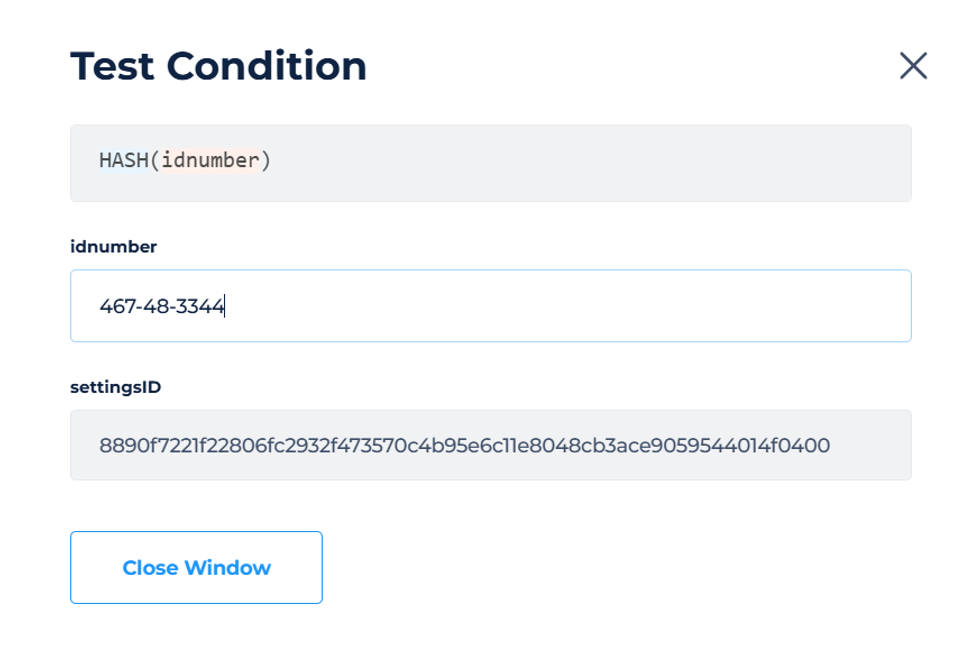
We added the new HASH() function to the DigiFi Formula Language. This function generates a SHA-256 hash of the provided text and returns it as a hexadecimal string. It allows you to generate deterministic IDs or mask sensitive values.
Improved SUBSTITUTE() Function
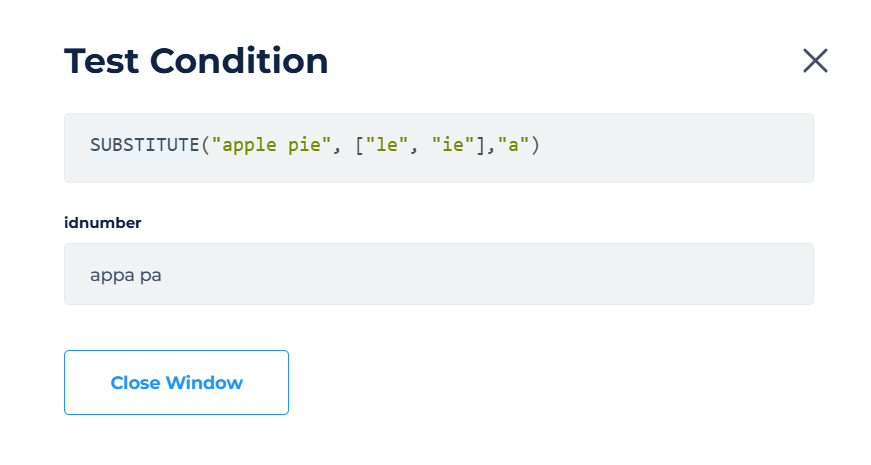
The SUBSTITUTE() function replaces old text with new text in a text string. The improved SUBSTITUTE() function allows the “old text” parameter to be a single string or an array of strings, enabling you to replace multiple values at once.
Old syntax:
SUBSTITUTE("text", "old_text", "new_text")
New syntax:
SUBSTITUTE("text", ["old_text1", "old_text2"], "new_text")
This improvement makes text manipulation significantly easier, especially for complex cleanup or formatting.
SHA256() Support in Data Integrations
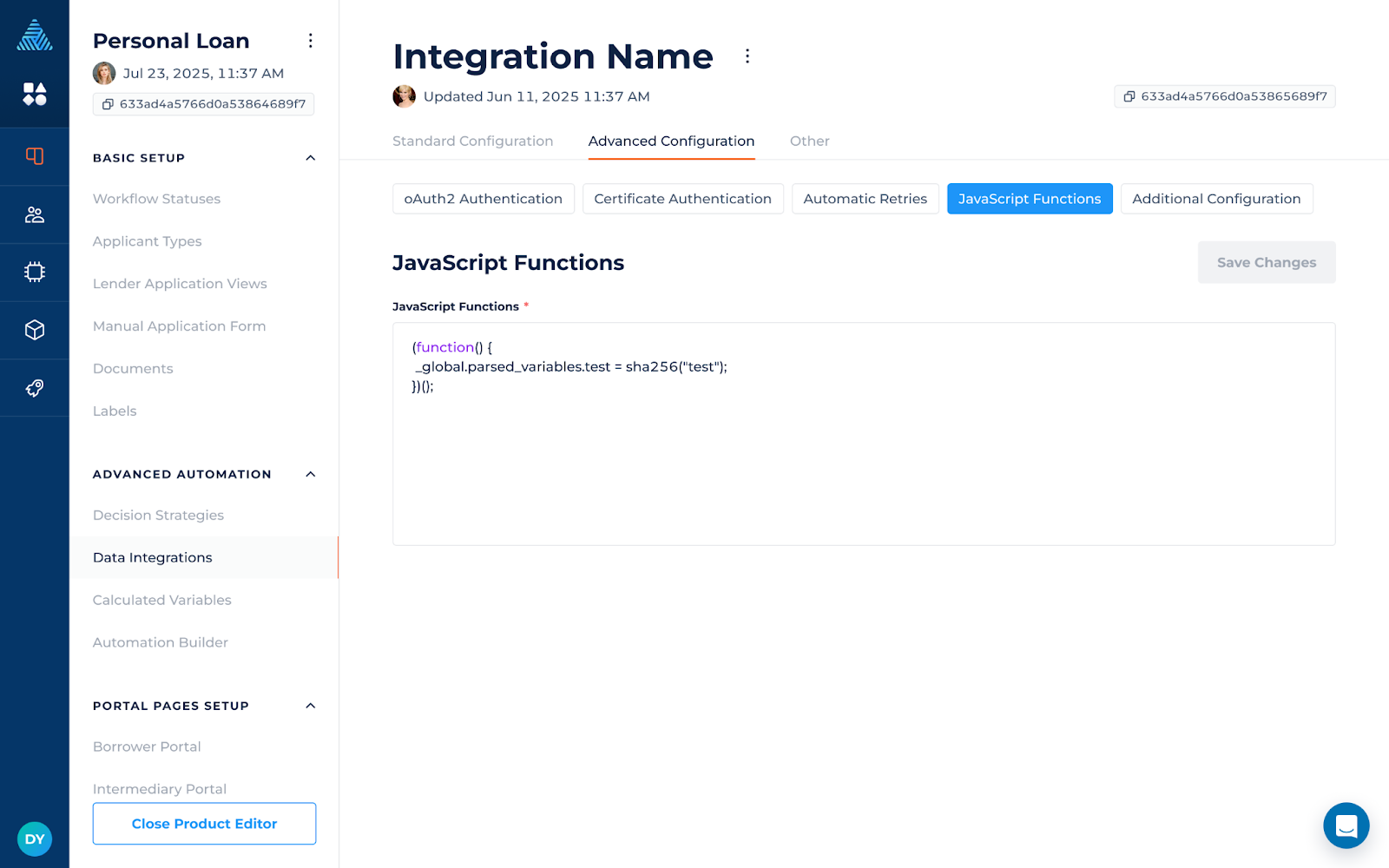
DigiFi’s data integration tool includes an advanced configuration option called JavaScript Function, which allows you to write a custom parser for processing response files – for example, to perform additional calculations or data transformations.
We’ve now added a new function you can use within this parser: the sha256() function, which allows you to generate cryptographic hashes directly within parser scripts.